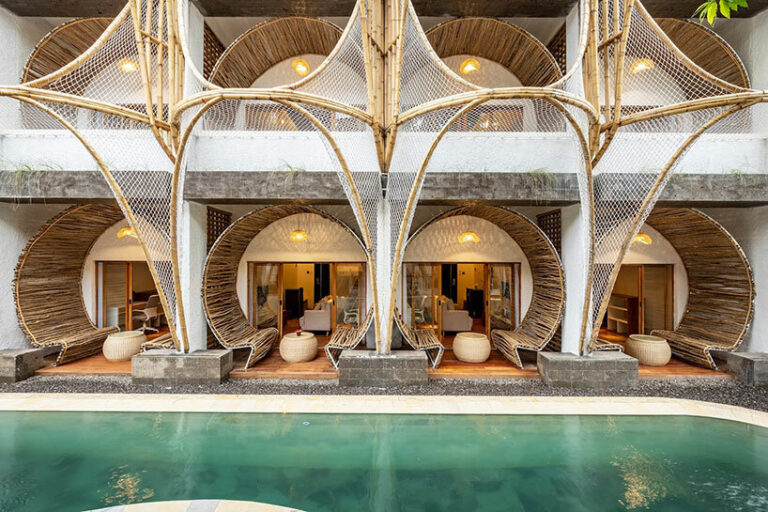

Finding the best hotel for your vacation rentals, whether it’s in Bali or elsewhere, is a genuine challenge. Hotel websites are obviously biased. You can read reviews, but how do you know if you can trust them? Many hotels have drawbacks that aren’t immediately obvious and so on…
So, our team of hotel renting experts has put together this guide to working out what hotels offer their guests and how to choose the perfect hotel room for you and the people that you are travelling with.
Our Step-By-Step Process To Find The Best Hotel
This step-by-step process helps you to think about your hotel choice in a logical manner and do more than compare prices. It’s about finding the right hotel experience for your needs, rather than booking accommodation on a whim.
When you weigh up all the factors associated with your hotel options, you can do more than save money; you can find a great hotel in every major city and destination that caters exactly to your needs.
1. Check Out Reviews, Including Guest Reviews

A good place to start is with hotel reviews. For example, this website offers in-depth reviews of the best hotels in Bali. However, we would strongly recommend that you read the reviews that have been left by previous guests, too.
This gives you a better overall picture of what any given property is like, and given that most of the booking websites provide you with reviews, it’s not hard to get to this information – it’s also available on Google Maps, which is handy too.
Understanding Guest Reviews In Relation To Booking Sites
We recommend that, before you start reading any reviews, you sort them by date, so you can read the most recent reviews. It’s no use reading 7-year-old five-star reviews if all the current reviews are one-star reviews. You want to know what you’re really getting for your money.
However, there are some things to bear in mind as you go:
- Five-star reviews – these are often not very helpful, though positive reviews are a good signal; they rarely go into much depth, and occasionally, they’re paid for by the hotel itself. It’s a good idea to delve a bit deeper and examine some of the other positive reviews with 3 and 4 stars. These reviews complain a little and help you learn if the laundry facilities are as advertised or whether the business center actually operates when you want it to.
- One-star reviews – as with five-star reviews, these reviews can also be pretty unhelpful; some people are just born to whine, and they leave negative reviews everywhere. They’re often a general moan without any specifics. Check out the 2 and 3-star reviews, and soon you’ll find out if the fitness center really is bad, or whether you’ve been reading the moans of a world-class neg head.
Read Between The Lines (Guest Reviews Have Invisible Fine Print)
Infrequent travellers often have no idea about the place that they are staying in and thus, leave negative reviews when there’s simply nothing to complain about and no other hotel is going to do anything better. Not all reviews provide valuable insights.
Watch out for things like:
- Complaints about a lack of air-conditioning in London. The UK is rarely warm enough to justify air conditioning; most hotels don’t have it.
- Complaints about a lack of heating in Bali. The Indonesian island is in the tropics, and it’s hot and sunny all year round; nobody has heating in their rooms.
- Complaints about expensive mini bars (always, wherever you go), bad decor (didn’t you look at the photos?), minor gripes with food (“my medium hamburger was verging on mid-rare”), etc.
These guests mean to be helpful, but they just aren’t. If you read a wide section of the reviews for a hotel, you can quickly start to gauge which people are making silly complaints and which have something more valuable to say. Making an informed decision means using informed data.
2. Look For The Right Accommodation Options For Your Vacation
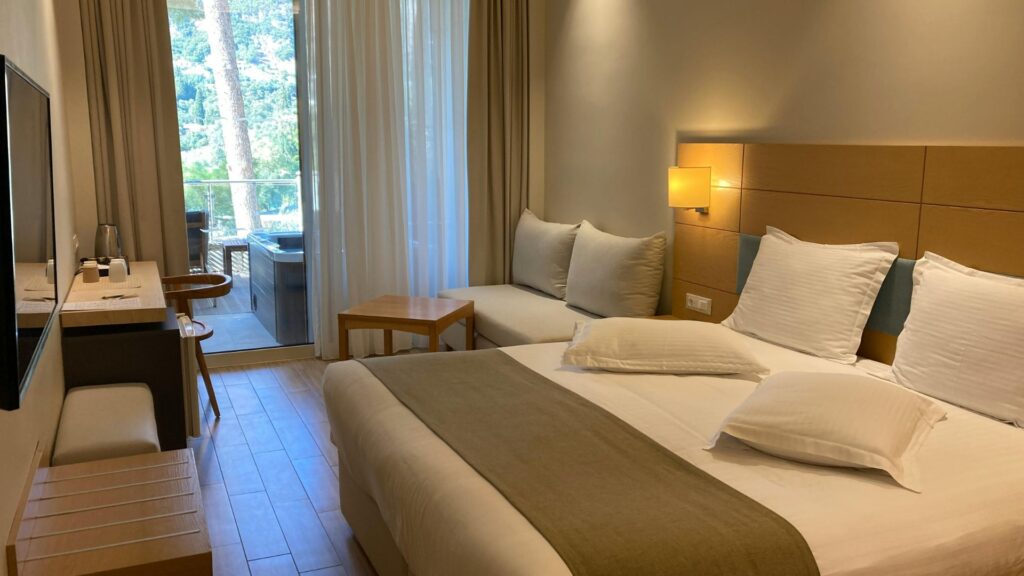
If you’re using a booking site, make sure to select the types of accommodation that you want and any other amenities that you need.
There’s no point in including dorm rooms if you want a suite in a 5-star hotel, and conversely, there’s not much point in having premium villas in the mix if you’re looking for a bed and breakfast for a city break.
We mention this because a lot of these sites now push Airbnb-style apartments, and while this may bring the lowest price for your trip, it also usually means no front desk, no room service, no regular cleaning, and it also often means there are hidden fees, etc.
Do a quick search for the room type that you want, and it becomes so much easier to get the right place for the best price.
3. Check Google Maps For All The Hotels In The Right Area

We like to open up Google Maps for the place that we want to stay and have a hunt around to see what hotels are in that area.
One of the easiest ways to make a trip fun is to cut down on travel while you’re there and spend most of your time out having a good time.
Location Search On Booking Sites (City Center Is Not The Only Option)
Some of the booking sites have a map search facility. If you know where you will spend most of your time in your destination, search around that area. It’s better to pay extra than to spend most of your trip stuck in traffic.
Of course, a metro or train station might be the answer, but for example, if you’re coming to Bali, there are no trains. You’ll want whatever accommodation type you choose to be closest to the places you want to visit. Get a great hotel in a great location.
4. Take A Look On Street View

Before booking that hotel room, take a look at the area on street view in Google Maps. Does it look safe? Is it clean? Are there street lights? That kind of thing.
While it won’t matter much if you intend to jump out of a taxi into the front door and then back out the door into a taxi, if you want to walk around the area you’re staying in, it really helps to know what it will look like.
In Bali, the premium 5-star hotels are likely to be very safe and in nice locations, though there may not be much within walking distance if you’re staying in certain areas; but a guesthouse might be in a dark alleyway. Choose the place that meets your needs.
5. Check The Room Details (Not Just Room Size)
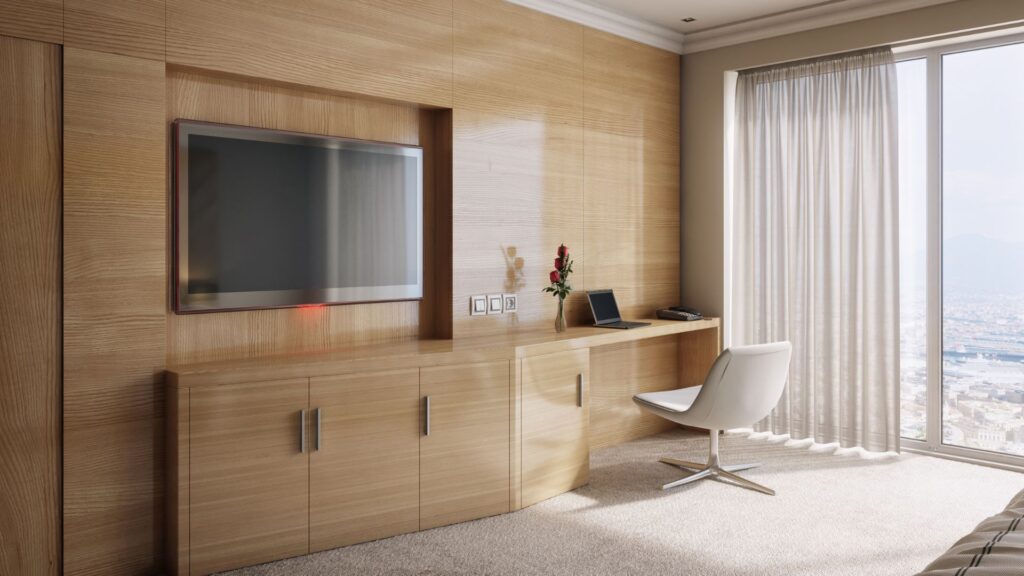
Photos are nice, but they are marketing. Take a look at the fine print – what size is the room? A 9 sqm hotel room is tiny, a 100 sqm hotel room is huge for most people.
Mostly, though, you’re going to want to work out if there’s enough space for you and your luggage. You may need a desk to work on or free Wifi. Your ideal location might provide other amenities such as a kettle or coffee maker, a microwave or a trouser press.
6. Don’t Underestimate The Value Of A Good Complimentary Breakfast
If there’s one factor people take too lightly when choosing a hotel, it’s breakfasts, but there’s no doubt that an amazing breakfast can help keep your food bills down and set you up for day trips, sightseeing, business meetings and more.
Many sites have started to offer grading for breakfasts to help you understand what you’ll be getting.
7. Shared Values (Sustainability)
For some people, their values are a huge deal, and one thing we think is worth checking is your hotel’s commitment to the planet.
While it’s hard to work out how much effort a place puts into staff relations, good hotels now publish ESG (Environmental Social and Governance) reports. That lets you better understand how your money is used not just to benefit you but also to help preserve the local environment for future generations and the community right now.
We think if you have the flexibility in your budget, it’s always best to go with a hotel that looks to make a positive difference in this world. Because why not?
8. Don’t Forget Your Budget
Speaking of budget, there’s no more important consideration when booking a place for most people and we’d suggest that you work out your budget before you start looking at places and that you keep within the room rates that you can afford.
It’s very easy to get caught up in the excitement of looking at the very best hotels and then to lock yourself into a place that you can’t quite afford or which eats substantially into your budget for food, tours, fun, etc.
A holiday needs to be balanced, and you can normally find a nice place to stay for a realistic budget that doesn’t break the bank in almost any location.
9. What Are The Cancellation Policies
If you’re making a deposit against your booking or you’re securing your booking with a card, then it’s very important that you find out what the cancellation policies are.
Some hotels will allow you to cancel without penalty right up until the day before you arrive, particularly hotels that regularly deal with business travellers. That’s because companies can switch things up rapidly and don’t expect to lose their cash, but they do pay a premium for cancellation policies this generous.
On the other hand, some online sites require you to pay for the whole stay upfront to get the best price, but they often offer no rebate or very little if your plans change and you can’t go ahead with your holiday.
Don’t lose out; always check this detail before you sign on the dotted line.
10. Check-In, Check-Out, Luggage Storage
Check-in and check-out times are important; things like luggage storage if you’re arriving early or departing later than check-out time are also very important.
Some hotels now offer an online check-in service where you just rock up to the front desk for a second and grab a key, and then you can go and get comfy; others will make you fill in endless paperwork. Some are flexible about your check-in time, others are absolutely steadfast about that time and so on..
You really need this info if you want to make a properly informed decision on where to stay. There’s nothing more miserable than sitting with all your bags in a hotel lobby for hours, because they can’t store them for you and their check-in time is 4 p.m. after you arrive on a 7 a.m. flight.
11. Shuttle Services And Other Amenities
12. Family, Couple Or Solo Travelers?
It’s important to think about your vibe. That 5-star resort might look super appealing in pictures and reviews, and have awesome airport shuttle services, etc., but is it going to be so great when you’re lying in bed with your newlywed spouse, and there are a million kids running past your bedroom door screaming?
If you want to travel with kids, these places are fabulous. If you don’t, they can feel like hell on Earth. The good news is that there are plenty of boutique hotels, apartels, etc. that are adults-only or which minimise the chances of unwelcome interactions with little ones, in addition to all those amazing places that love children and have kids’ pools, kids clubs, etc.
13. Loyalty Programs
If you stay in hotels a lot, then loyalty programs can add real value to your life. Big chains like the Hyatt, Marriott, Shangri-La, etc., all have them, and you earn points on the cost of your room and often on other expenses in the hotel, from day trips to food and drinks in the restaurant.
These benefits are often quite substantive if you’re going to spend a few weeks in a hotel each year. However, many loyalty programs are worthless if you’re only going to spend a week or two once a year in a hotel.
That’s because the points tend to expire quickly, and you often need a lot of points to get anything useful. So if you think it might be worth it, take a deep dive into the terms and conditions of the program before you sign up and book your stay.
14. Taxes And Hidden Fees
One thing we’ve found is that in the last few years, many sites are now allowing for a vast range of hidden fees. This is especially true if you choose Airbnb-style accommodation options rather than hotels.
So, you may find that there’s a cleaning fee, a keydrop fee, a fee for administering the fee, etc. added on top of your final bill.
We’ve also seen a lot of places around the world introduce tourism taxes on rooms, whether they’re in a hotel or an apartment block. Sometimes, these fees are included in the rate quoted; sometimes they’re added at the hotel. $10 a night per person, might not sound like much if you’re going away for a weekend on a solo trip, but for a family of four on a 2-week holiday, that’s an extra $560!
Make sure to carefully read through the terms and conditions before you book, particularly if you can’t get a refund when you cancel.
15. Special Offers
While every hotel has a “rack rate” (the official rate for a room) and then a discounted rate (usually found on booking sites, etc.), you will find that you may be able to get other special offers throughout the course of the year.
Some places will offer free upgrades to a club room (offering access to the executive lounge and a bunch of additional perks), some will give you a free meal for staying two nights, etc.
These special offers can sometimes substantially reduce the overall cost of your holiday, and it’s worth looking out for them before you book.
16. The Small Print
However, there are also plenty of “unspecial offers” out there too, and one thing we’ve noticed is how many hotels require you to attend Xmas or New Year’s Eve meals if you stay on these dates. These meals are often fabulous, but very, very expensive.
You have to go through the small print with a fine-toothed comb and ensure that you’re not entering into an agreement that forces you to pay for dining options that you don’t want, or charging you a penalty for booking direct or any other odd condition.
This is much more important than ascertaining the WiFi situation; even the requirement for a huge (but refundable) deposit on check-in can ruin your holiday if your cash flow is tight.
FAQs
What Is The 5’10 Rule In Hotels?
This is normally called the “10 and 5 rule”. It’s about how customer service should function within a hotel based on the idea that making guests feel welcome is much of the battle when it comes to delighting guests.
So when a guest comes within 10 feet of a member of staff, they ought to make eye contact with the guest and smile at them. If they come within 5 feet, the staff member should add a verbal greeting such as “hello” or “good morning”.
Which Floor Is Best In A Hotel?
Some people will argue that this is a matter of personal taste, but experienced travellers will tell you that the best floors in a hotel are the 3rd to 6th floors.
Why?
Well, because rooms on the ground or first floor are often the ideal targets for thieves, and it can be hard to keep a determined intruder out of these floors. Whereas if you stay above the sixth floor, it’s hard for rescue equipment to reach you in case of a fire.
These floors also tend to be high enough to avoid noise from the street and from the lobby, but not so high that they start to get wind noise.
You may also find that staying in a corner room gives better views and fewer shared walls with other guests. You don’t want to be too close to an elevator, nor so far that it’s a slog to get from your room to the elevator when you need it.
Finally, it’s a good idea to consider the path of the sun, particularly in really hot places. Having the sun shine directly into your room in the heat of the day can make things much warmer than they need to be.
What Is The Most Important Factor When Choosing A Hotel?
We’d say that there are three vital factors rather than one when choosing a hotel – the location that you want to stay in, your budget and the amenities that the hotel provides.
The right location often varies depending on the type of trip, from a central location for sightseeing to an airport hotel or convention centre hotel for business people. And someone seeking a relaxing break might look for somewhere out in the countryside.
The right budget is all about ensuring your travel plans don’t kill your bank balance. And amenities ensure that the things that are important to you are on hand.
What Is The Most Stolen Item From A Hotel Room?
Guests steal lots of things from hotels, and if they get caught, it can land them in a lot of trouble. There is a famous video clip in Bali of a family having their luggage turned out by hotel security, and half the room was found inside their suitcases, and then, the police were called.
However, the most common items for guests to steal are towels, followed by bathrobes (usually found in high-end hotels; this isn’t a problem in hostels), coat hangers, hotel pens, toiletries, slippers, etc.
Final Thoughts On Choosing The Perfect Hotel Room
Getting a good deal on a hotel is as much about selecting the right hotel as it is about price. Many hotels will offer the basic facilities that you need, but if you read reviews and check the details, you are much more likely to find somewhere that will really feel like a home away from home on your holiday.
If you use our list above as a checklist before you book your hotel, whether you book through our affiliate links, you’re booking with the hotel directly, or using a booking website, you’re going to find that you have an amazing time. Enjoy!
You can also check out how traditional Balinese hospitality shapes the modern environment and learn which hotels in Bali have the prestigious Michelin Key Awards.