Bali’s a special place and in the last decade or so, it’s evolved from what was really something of a sleepy backpacker haven to a global magnet for discerning travellers of all types. Bali’s luxury segment is now the island’s crown jewel of tourism, with cliffside villas in Uluwatu, jungle sanctuaries in Ubud and beachfront properties in Seminyak and Canggu leading the charge.
It’s fair to say that this year is becoming something of a pivotal moment in Bali’s hotel industry. The post-pandemic recovery has seen things on the ground turn into a sophisticated, competitive marketplace where supply is surging, guest expectations are rising, and the key to success is now differentiation.
That means luxury hospitality here in Bali is no longer just about luxurious rooms with stunning views. It means that guests expect personalised, authentic, sustainable and immersive experiences that align with their own values. They expect wellness, privacy, cultural depth and environmental responsibility as the bare minimum.
With over 1000 new properties opening (or, at least, scheduled to do so) in the coming year, including a heavy emphasis on luxury and wellness-focused resorts, the bar for winning over visitors is set higher than ever.
Here’s a look at what we expect looking forward from this year, drawn from market reports, industry trends, local tourism feedback and our own on-the-ground insights.
Slow Travel: The Rise Of Quiet Luxury And Immersive Experiences
The days of people landing in Bali, racing around the island in a mad flurry of ticking off bucket list experiences are slowly fading. Given the island’s traffic situation, this can only be a good thing for everyone.
Instead, in 2026, luxury travellers are seeking out quiet comforts; they want understated elegance that is focused on privacy, natural surroundings, opulence and genuine cultural immersion rather than flashy but empty tourist displays.
This means that guests want longer stays (one base or maybe two at the most, rather than constant motion with many stops) and deeper connections to the places that they stay in. They demand environments that feel authentically Balinese.
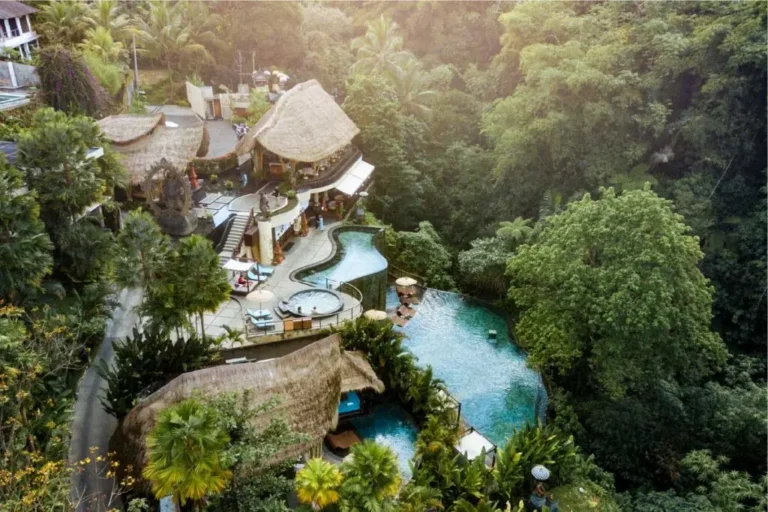
There’s no doubt that private villas with plunge pools overlooking the rice fields and jungle in Ubud or clifftop hideaways in Uluwatu with wonderful views of the ocean are in high demand for this kind of holiday.
They are places where architecture can blend seamlessly with the local landscapes, using local materials like bamboo, teak and volcanic stones.
Guest Expectations:
- There’s a desire for spacious, independent villas rather than standard hotel rooms.
- There’s an expectation of bespoke experiences such as private yoga sessions at sunrise, chefs that curate farm-to-table dinners with ingredients from the hotel garden, ceremonies at local temples that the Balinese people lead, and guided tours with cultural immersion from local artisans.
- Most of all, it’s mandatory that service is discreet and anticipates the needs of the guest without intruding. We expect to see more AI-powered personalisation for room settings, preferences, dining choices, and itineraries, but with a warm human touch.
There’s no doubt that branded residences and villa hotels are booming in Bali right now. They offer the privacy of home with hotel-level amenities. Canggu, and in particular, Berawa, is dominating in this space, and Uluwatu and Ubud have some excellent positioning to offer too.
Wellness: Placing Health At The Heart Of Luxury-Hospitality In Bali
For many visitors to Bali, wellness is no longer seen as an add-on product that hotels can offer as an optional extra. They expect wellness to be at the core of a luxury offering.
Bali has, of course, long been considered a spiritual and healing destination (not least since the release of Eat, Pray, Love in book and movie form). Now, that sector is increasingly professional with the integration of both traditional knowledge and scientific programs, holistic treatment programs and longevity-focused retreats.
Guest Expectations:
- It’s not enough to make claims; they have to be supported with evidence. The demand is for biohacking, nutrition based on local superfoods, massage based on local herbal elements, and mental health programs that combine Balinese healing with modern therapy.
- High-tech spas and fitness facilities need to be integrated with much more than a massage and an exercise program on offer. The expectation is that you will offer cryotherapy, personal yoga lessons, sound healing in the jungle and even bespoke longevity protocols.
- A specific niche that you can serve to the fullest extent, there’s a big difference between a solo reset retreat and a multi-generational family wellness practice.
One thing we’re seeing much more of now is that luxury brands are really leaning into this space. Renovations and new builds are prioritising low-carbon designs, natural ventilation, holistic wellness, and spaces for mindfulness. Take a look at Umana Bali or LXR Hotels & Resorts for some excellent showcases of how sustainable luxury and wellness can be brought together.
Travellers, and in particular high-net-worth and ultra-high-net-worth individuals, expect their journeys to enhance their overall wellbeing. With an expected boom in the number of people in these two categories, Bali seems perfectly positioned to capture their business in 2026 and beyond.
Sustainability: The Transformation From Buzzword To A Non-Negotiable Standard
For the longest time, it’s fair to say that sustainability was a bit of a game for the world’s hospitality industry. You paid a bit of lip service, made some vague commitments to be eco-friendly, and then you didn’t do much more, and things carried on as normal.
In 2026, more and more guests are actively doing their research about a property’s eco-credentials, and they expect to find something substantive. That means the places that are “greenwashing” are going to start losing market share.
Guest Expectations:
- The bare minimum is to be able to demonstrate regenerative practices in the day-to-day operations: that is, carbon-neutral (or better, carbon-positive) working environments, active water conservation (particularly important given Bali’s current water table challenges), zero-waste dining throughout the hotel wherever possible, and community outreach and support programs.
- Ideally, there’s also a need for eco-luxury in architecture and design. That is, the use of bamboo, teak, volcanic stone, etc., as materials, solar power, rainwater harvesting, waste-to-resource systems and biodiversity conservation and protection measures.
- Most of all, these commitments must be measurable. That means certifications, audits and absolute transparency. Properties will highlight their eco-friendly qualifications and provide verifiable impact reports for guests to inspect.
You can find new resorts all over the island seeking to minimise their environmental footprint while maximising their guests’ connection to nature.
Farm-to-table may have started as a trend, but now, guests in luxury properties expect it. And many luxury properties in Bali have their own organic gardens and partner with local farms to deliver the best, freshest organic produce.
Oversupply in many parts of Bali means that only truly differentiated luxury properties are going to thrive in the long-term. That generic “you can find it anywhere on Earth” luxury experience is going to struggle. People will pay a premium for something authentic and sustainable.
Luxury Dominates: In New Openings And Pipeline, Luxury Is The Key To Supply Growth
Bali’s hotel pipeline, which includes FINNS Bali Resort in the new FINNS Lifestyle Village, has high-rate tiers comprising a significant proportion of the projects. Nusa Dua, Uluwatu, Canggu, Ubud and Jimbaran are hotspots for these developments.
Notable trends for new properties in 2026:
- Uluwatu’s Cliffside Boom: Uluwatu’s dramatic cliffs are ideal for intimate luxury resorts like Seascape Uluwatu, Umi Resort, etc. and expansions from established names on the island. After all, who doesn’t like the idea of an infinity pool view high above the Indian Ocean?
- Ubud’s Wellness Retreats: There’s a near explosion of new wellness retreats with rice or jungle vistas. These include Equipoise Resort, Asvara and Kimpton Suntaya.
- Branded Entities and Repositioning: Regent Bali Canggu, JW Marriott Ubud, etc., are bringing even more ultra-luxury service standards in an already competitive niche.
Luxury segments in Bali showed the strongest ADR (Average Daily Rate) growth on the island. An average of various estimates shows that it’s up 8% year-on-year.
In this sector, for now, Nusa Dua leads on occupancy thanks to its MICE venues and reliable leisure travel demand.
Branded residences will continue to expand, which appeals to investors and long-stay guests who want ownership-like experiences with hotel services but with less hassle than maintaining their own properties.
Bali’s Technology Revolution: Personalisation And The Guest Experience Evolution
We know that there’s some backlash among most market sectors regarding the use of AI. But in the hospitality industry, AI and smart tech will be used to enhance the experience and will never replace the human touch.
You can expect seamless and contactless check-ins, predictive personalisation (the joys of the room or rooms adjusting their lighting, temperature, etc. based on your past behaviours) and offers of virtual concierge services.
In Bali’s luxury sector, it’s possible to use technology to serve the romance of the island: Imagine drone deliveries to your villa, AR (augmented reality) for cultural tours, apps that enable private driver coordination, enhanced services in Bali’s beach clubs based on dynamic offers in the venue, etc.
However, the gold standard for the guest experience, one that is rooted in the principles of Tri Hita Karana (harmony between people, the natural world and the divine) will always drive the Balinese hospitality offering and that demands people, not machines.
We’d also expect to see touches of this in gastronomic offerings in the luxury sector. Multi-concept restaurants with teams of local and international chefs, using hyper-local sourcing on the blockchain to demonstrate provenance, with immersive dining experiences.
The wine lists, cocktails, and plant-forward options will all benefit from technology to suggest ideal accompaniments and to assure guests of authenticity.
Bali’s Luxury Sector Market Dynamics: Opportunities And Challenges
It’s fair to say that there are some real opportunities in this market in the coming years, including:
- There is strong demand from Australians (who remain the top source market for Balinese tourism) and Europeans, and there’s growing demand from high-net-worth segments of emerging Asian economies
- The luxury market here in Bali has excellent performance metrics, it shows increasingly resilient occupancy rates, and the RevPAR (Revenue Per Available Room) in premium properties is first-rate too
- There is also a real push from the local government and the industry on the island as a whole to focus on “quality tourists” and less on quantity in the future
But there are also real challenges that can’t be denied either, and they include:
- There is a lot of oversupply, putting pressure on mid-tier properties and generic luxury properties. Without differentiation, these properties are struggling to capture the imagination of visitors
- The island’s infrastructure is groaning under the weight of visitor numbers, particularly in the high season from June to August. Traffic is heavy, water tables are under threat, and waste is a chronic problem, and these are going to require collective solutions to be resolved
- The regulatory environment is challenging. While there is a focus on sustainability and community benefits, enforcement is often weak or extremely heavy-handed, and foreign investments are often treated with hostility even when they comply with all legal burdens.
The properties that win out under these circumstances are the ones with clear brand DNA, exceptional design, strong wellness integration and a genuine focus on sustainability.
Breaking Out The Crystal Ball: A Long-Term Vision Of Luxury Tourism In Bali
Looking further into the future, Bali’s luxury hospitality sector is going to deepen its role as a global wellness and regenerative tourism destination.
We’d expect to see more inter-island synergies (with, for example, Lombok or Java) with ultra-exclusive private island-style experiences and serious innovation in the experiential travel arena (think art residencies, culinary academies, conservation volunteering, luxury co-working and the like).
Climate resilience and community equity are not going away; they’re going to become a key factor in differentiation for luxury properties. We think there will be big investments in local talent development, cultural preservation, environmental stewardship, and relationship building between government and the industry itself. This will help build lasting guest loyalty and premium positioning in the market.
The K-shaped recovery globally means that the ultra-luxury segment is just going to keep polarising and becoming ever more premium. We think Bali is well positioned to capture a larger share of high-spending travellers who want meaningful escapes.
Final Thoughts On Preparing For Your Luxury Bali Experience
We’ve got some final advice for you. If you’re travelling to Bali, we recommend that you book your luxury experiences early if you’re visiting in the peak seasons (not just July-August but also the Xmas and NYE periods).
We urge you to prioritise properties with real sustainability credentials and good wellness offerings. Think about staying longer in one area, such as Canggu for vibrant, upscale vibes or Ubud for culture and rejuvenation.
For investors, we’d say that you ought to focus on niche differentiation, wellness and ESG initiatives. This market seems to reward quality over quantity.
Bali’s luxury hospitality sector in 2026 and beyond is looking at an era of refined escapes, conscious luxury, authentic experiences and profound connections. The island isn’t just a destination; it’s shaping up to be a transformative experience.
Whether you’re planning a holiday or a business trip, Bali will continue to enhance those who come with intention.
The unique blend of natural beauty, cultural treasures, and world-class hospitality standards means that Bali remains without equal on the global stage. The future looks bright for those who choose this tropical paradise.
We think that you might also appreciate our pieces on supporting local communities in Bali and temple etiquette on the island.