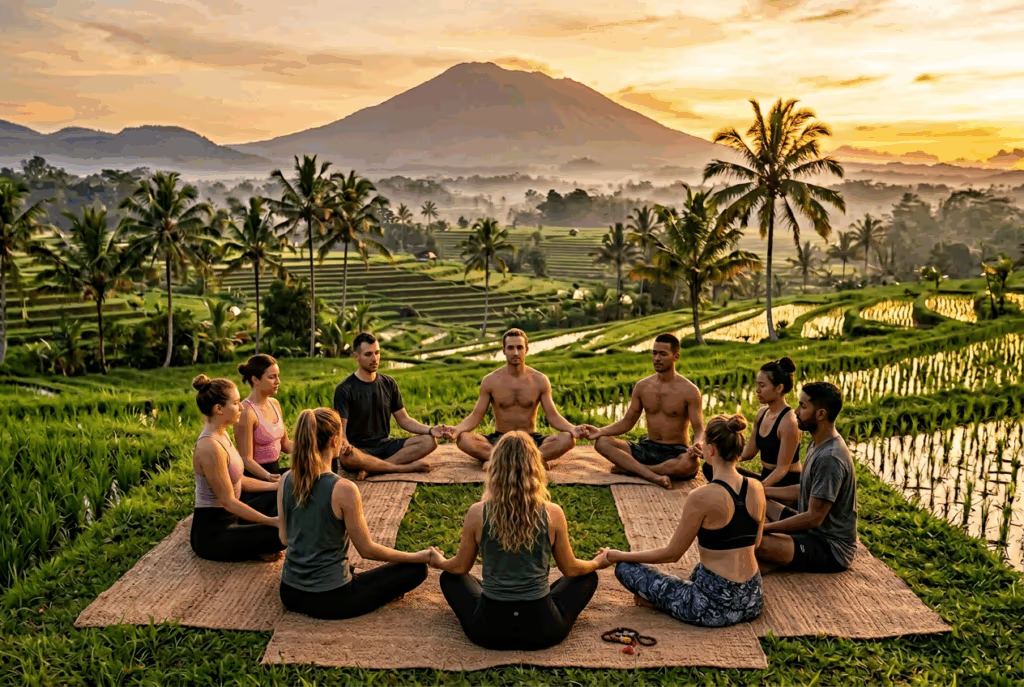
Bali is often referred to as the “Island of the Gods”, and it’s for good reasons. The volcanic landscapes, temples and deeply rooted local Hindu-Balinese spirituality are the perfect place for inner work.
The yoga and meditation scene here has exploded in recent years, and what started as a niche for seekers has become a major industry, with hundreds of options from budget-friendly yoga holidays in Ubud to luxury detox programs by the ocean.
But not all Bali’s retreats are created equally. Some can deliver truly profound and lasting changes. They shift how you relate to stress, your body and your purpose. Whereas other places may offer beautiful Instagram snaps, vegan smoothies and then a temporary high that fades quickly when you get back home.
So, today, we want to share with you what sets the life-changing experiences apart from the background noise.
The Balinese Yoga Boom: Opportunity And Over-Saturation
It’s not so long ago that Ubud was a sleepy backwater town with a certain appeal to “hippy” types thanks to its calming rice paddies, jungle ravines, captivating waterfalls, vibrant monkey forests and unique energy.
Today, thanks, in part, to a starring role in the book and movie, Eat, Pray, Love, it’s one of the busiest places on the island and the epicentre of the yoga boom.
Head to Canggu or Uluwatu and you’ll find that if you love to surf with the yoga experiences, you’re well catered for on the island’s best coast.
And in places like Tabanan and Nusa Lembongan, a third wave of yoga retreats is appearing, which are focused more on quieter escapes.
The demand here is real. In a post-pandemic world, travellers don’t just want to relax, they want to reconnect. Retreats promise everything from chakra balancing to emotional cleansing.
Unfortunately, there’s a downside to this. “Yoga factories” are appearing with oversized classes, teachers that change constantly, and marketing that far outpaces their substance.
Many of the trendy yoga retreats prioritise the aesthetics of their environment to chase virality on social media, rather than seeking true spiritual depth. When you find perfectly curated photo ops and generic “find your bliss” copy, you should proceed with caution.
The transformative places are different. They treat the retreat as a sacred place of intentional programming, rooted practices and genuine community that supports ongoing wellness and harmony long after you check out and head home.
Authenticity Vs. Appropriation: Roots Matter
One of the easiest ways to examine these places is to see if they have true respect for Balinese culture and its broader yoga traditions. Bali’s spiritual environment blends animism, Hinduism and other influences to create a unique environment.
Authentic retreats will offer integrated local elements in meaningful ways, such as daily canang sari offerings, visits to temples (such as Tirta Empul for a water purification ritual), Balinese healing (through balian healers), and possibly traditional Watukaru yoga and meditation styles, which have been handed down by local practitioners.
For example, a place like the Om Ham Retreat was founded by Balinese Master Guru Ketut Asana, who comes from a family of shamanic healers. It emphasises Kundalini Tantra, which is drawn from local traditions and classical practices.
Or the Fivelements Retreat Bali, which sits on the banks of the Ayung River and focuses on elemental healing, local plant-based cuisines as medicine, and Balinese rituals within its eco-friendly, luxury walls.
Whereas trendy resorts will slap a “Balinese-inspired” label on a standard Western vinyasa flow and hire instructors with no local connection. They’ll treat ceremonies as optional add-ons rather than an integral part of their programs.
That means participants will leave with some pretty pictures but without any understanding of the island’s living healing wisdom. True transformation often comes from cultural humility and immersion that respects the hosts.
Yoga Teachers In Bali: Experience, Lineage, And Presence
The instructor is the key to the whole experience, the heart of the retreat. A truly transformative experience must feature teachers with deep personal practice, clear lineages (Indian, Balinese, well-integrated Western, etc.) and the ability to provide space for vulnerability.
A good teacher will adapt to the group, provide a philosophical context and help to model integration in favour of performance.
The best facilitators have lived in Bali for years, studied with local masters and maintain ongoing personal sadhana (a detachment from worldly things). Many first-rate centres bring in visiting international teachers but seek to balance their presence with consistent local staff embedded in the community for continuity.
In contrast, the trendy spots rely on charismatic influencers with large followings but no real evidence of roots. Their classes feel more like workouts with a bit of spiritual window dressing. Large group sizes (50+ in a shala) limit any kind of personalisation, and there’s often very little follow-up. Reviews may point to “feeling like just another body on the mat”.
Program Depth And Structure: Beyond The Yoga Mat In Bali
A transformative retreat schedule offers a balance between asana, pranyama, meditation, and rest with workshops of philosophy, shadow work, somatic healing, etc. It will include periods of contemplative silence, journaling and nature immersion and often one-on-one optional sessions. Meals are fully intentional, usually organic, plant-based, and Ayurvedically influenced and drawn from local ingredients.
Post-retreat work is also crucial. Quality programs provide resources, alumni groups and follow-up calls. There’s an understanding that real change happens when you return to your “real life” and apply the tools you’ve picked up in Bali.
Trendy places pack the curriculum with back-to-back activities for “experience”, leaving people exhausted. Meditation might be a 10-minute add-on. There’s a heavy emphasis on luxury perks like infinity pools and spa treatments, but much less on inner processes. The overall vibe is more wellness resort holiday than a place for growth and wellbeing.
Environment And Energy: Where You Learn Can Teach You Too
The natural environment here is potent. Jungles, rivers, oceans and amplify your practice. Transformative retreats are in locations chosen for their energistic qualities; they’re not in the middle of heavy traffic or next to party places. Yet, they are accessible enough to provide options and balance. Think rice fields in Penestanan or riverfront sanctuaries in Ubud.
Udara Bali near Canggu offers ocean views and a grounded focus on detox. The Yoga Barn in Ubdu provides community energy and variety, though the popularity of this location means bigger class sizes.
Overly commercialised spots in high-trafficked areas can feel draining even if they have a beautiful design. Noise, crowds, and constant photo-taking disrupt the meditative field.
Community And Vulnerability: The Power Of Shared Spaces In Bali
Transformative retreats ensure that they foster connection but that they never force it. Small to medium group sizes (8-20, no more) allow you to form real bonds. Shared meals, group discussions, and ceremonies create safe spaces for emotional release.
Many participants report lifelong friendships or support networks.
Trendy spots, on the other hand, often feel performative and value social media curation over authentic sharing. Large groups can lead to cliques or isolation. Everything stays surface level.
Red Flags For Trendy, Commercial Yoga Retreats
Watch out for these red flags before you book:
- Vague promises of “guaranteed transformation” or of miraculous cures
- Heavy influencer marketing with very little emphasis on teacher credentials and lineage
- No clear daily schedule or overly packed itineraries, trying to squeeze every drop out of a day
- Mismatched marketing to reality (check recent reviews)
- Lack of transparency regarding group sizes, cancellation policies or what’s even included
- Disconnection from the local culture or community
- Pressure to upgrade constantly for “premium” experiences
How To Choose Your Transformative Bali Yoga Retreat
There are some basic precautions you can take to get the right place for your retreat:
- Define your intention – what do you want to get out of this? Deep healing? Achieve a beginner’s level of competence? Combine surfing with yoga? Immersive meditation?
- Do your research – use platforms like bookretreats.com to check verified reviews, read recent ones and look for patterns (both good and bad).
- Ask questions – ask the resort about the teacher experience, group sizes, daily flow, cultural integration and support.
- Consider the timing and location – shoulder seasons are going to be less crowded (Apr/May and Sep/Oct). Then match your vibe to your needs. Canggu for dynamic energy, Ubud for spiritual depth, etc.
- Budget realistically – it’s going to cost around $150-$400 USD a day to get a quality all-inclusive retreat. Remember that cheaper doesn’t have to mean “worse” when it has a focus on substance, and that ultra-luxury isn’t a guarantee of depth.
- Trust your gut – the right place will resonate with you on their website, through testimonials and a proper response to your enquiries.
Standout Examples Of Transformative Offerings In Bali
There are places that are very popular here because of their success, and these include:
- Om Ham Retreat – an authentic Balinese-led Kundalini practice and healing focus in a peaceful rice-fields setting
- Fivelements Retreat Bali – elemental healing, high-end but grounded, strong on rituals and nature
- Blooming Lotus – a personalised program with lineage-based teaching and a strong community focus
- The Yoga Barn – great for variety and community, but best for those who thrive in high-energy large group scenarios (though you can enjoy smaller workshops and transformation packages at premium pricing)
You can also find smaller, specialist programs in Tabanan or Sidemen that deliver outsized impact thanks to their intimacy and local immersion.
The Lasting Impact: What Does Transformation Really Look Like?
Guests who enjoy deeper retreats describe shifts in their lives that endure. They find better stress management, clearer boundaries, renewed purpose, improved sleep, and develop a more compassionate self-relationship.
They return home with practical tools such as breathing exercises for their anxiety, anchors for their meditation and philosophical perspectives that can help them to reframe their challenges.
This isn’t something that happens by accident. It requires a space that prioritises their safety, depth and integration over spectacle.
Final Thoughts: Your Bali Yoga Journey Awaits
Evidence suggests that the magic of Bali is real, but that you have to meet it where you are. An approach that is filled with respect, clear intentions and discernment tends to see the island deliver more than just a tan and some nice Instagram snaps.
Whether you choose a quiet jungle sanctuary or a vibrant Ubud hub, if you prioritise substance over shine, that’s what you’ll find.
The most transformative part of any retreat happens within you. Bali is the mirror and the support for the change, not the change itself. Do your research, listen to your inner voice and choose an experience that calls out to your soul, not just to your social media savvy.
If you’re planning your trip right now, start with intention setting today. What are you really seeking? The right door will be ready to open when you’re ready to open it.
You may also enjoy learning about the balance between authenticity and exclusivity and digital nomad luxury in Bali.