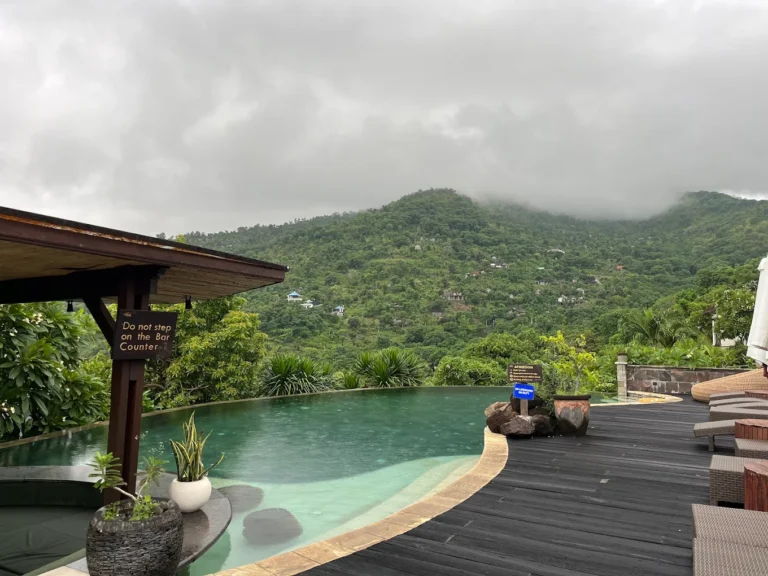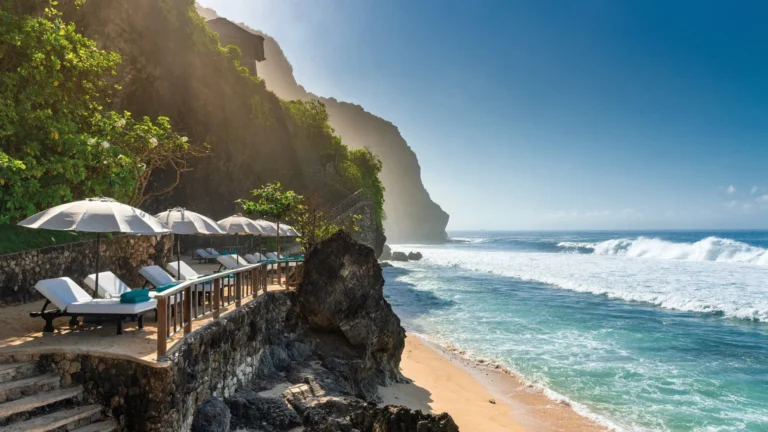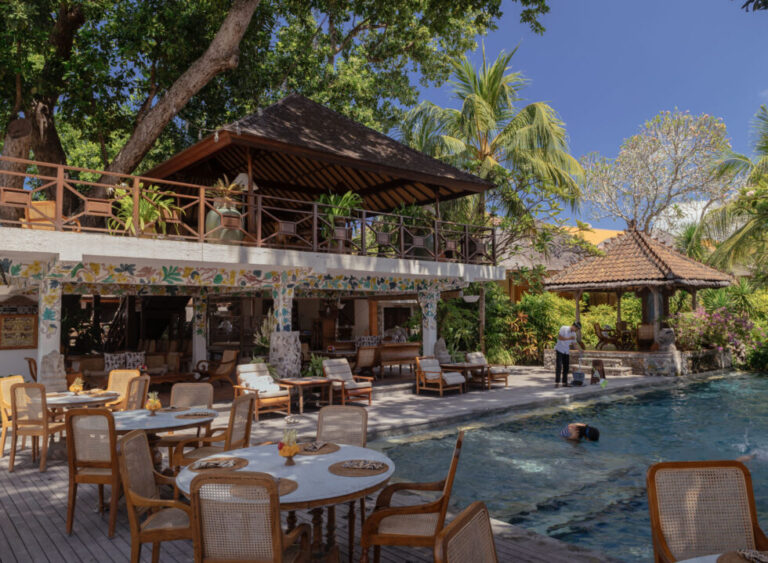
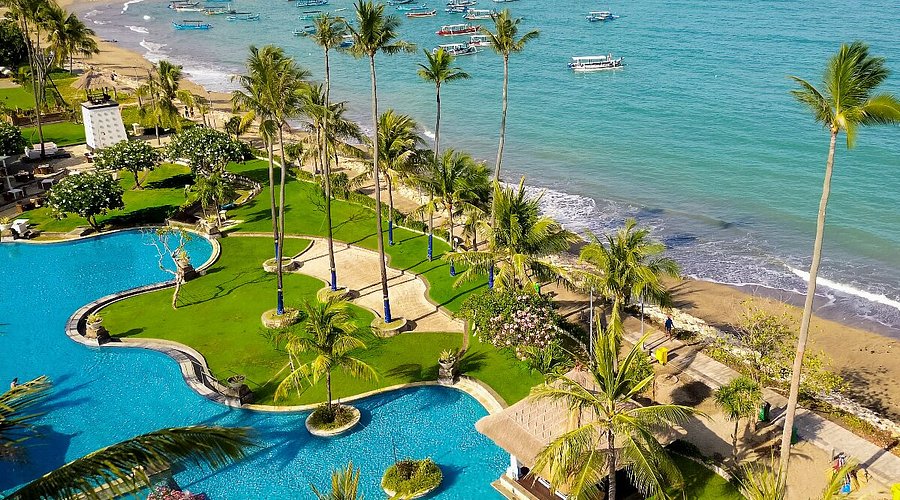
Bali’s coastal hotels are a large part of what gives this tropical island its allure. It’s the infinity pools overlooking turquoise waves, the beachfront villas with butlers and the sunsets that go on and on over the South Coast.
One thing we’re concerned about as part of this sector is how it’s evolved through a series of boom times (and one awful pandemic era) to navigating existential threats.
Climate change is no longer a distant concern to Bali; it’s actively reshaping the coastline, guest expectations, operational costs and the long-term viability of beachfront properties.
This isn’t some form of alarmism; we leave the debate over the causes of climate change to those better equipped to deal with it than us. It’s simply the reality that faces hoteliers, general managers, and investors across the prime strips of Bali’s South Coast.
22% of Bali’s coastline has been categorised as highly vulnerable to climate change impacts, such as erosion, flooding, etc., and coastal hotels are on the frontlines of this new struggle.
The Science Behind The Changes In Bali
We’ll keep this bit brief as it’s really a summary of what you already know, combined with some specifics regarding Bali.
Since 1880, the global sea level has risen by 8-9 inches, and it’s thought to be accelerating due to water volumes from melting ice sheets at the poles.
Indonesian projections see this rising too, with local factors like land subsidence amplifying the risks of rising sea levels.
Studies that have targeted Bali show concerning trends. Between 2016 and 2021, the coastline shrank from roughly 668.84 kilometres to 662.59 kilometres. That’s a loss of over 6 kilometres, approximately 4 miles in just 5 years!
The coastline of Bali is eroding at more than twice the average rate of erosion facing coastlines globally. Oddly, the shoreline of Bali actually increased during this period, despite the lost coasline, thanks to land reclamation.
By 2100, estimates suggest that thousands of hectares of low-lying coastal land in the regencies of Badung, Buleleng, Jembrana and Denpasar will be underwater if the water level keeps increasing along with coastal erosion at today’s rates.
Warmer sea temperatures are driving coral bleaching, weakening the natural barriers that protect many of the island’s beaches. More intense extreme weather events, such as heavier rainfall, stronger storms and higher tides, are compounding erosion and flooding.
This means that the big tourism destinations of Kuta, Seminyak, Nusa Dua, Sanur, and even parts of Canggu and Uluwatu are likely to see a substantial impact from climate change.
What Does This Mean For Bali’s Coastal Hotels? The Direct Consequences
There are real, observable consequences of the climate change already impacting Bali, and they include:
Beach Erosion And Land Loss
Many of Bali’s most iconic beaches are retreating. While this loss is most noticeable at Kuta Beach, where a combination of natural erosion and erosion caused by intervention has washed away most of the beach, properties with their own beach access are witnessing narrowed and disappearing shorelines.
Seawalls are built as “quick fixes” to the problem, but they push the problem further around the island; they don’t eliminate it. They also often create unsightly barriers, ruining the views of an ocean paradise that the island’s visitors expect.
Erosion damages foundations, pools and beachfront restaurants too. In Kuta, many of the beach restaurants are now flooded at high tide on a daily basis. Maintenance costs skyrocket as hotels fight a losing battle with the sea.
And in severe cases, rooms and entire wings can become unusable at certain times of the year when heavy storms hit the shore.
Flooding And Storm Surges
Bali has seen increasingly heavy rainfall (though 2025’s extremely heavy rain is unlikely to be repeated until 2035 due to other conditions in the seas) and king tides, and these lead to more inundation.
Low-lying properties have faced and will continue to face disrupted operations, damaged infrastructure, and guest safety concerns. Recent years have seen flooding events that closed roads, affected airport access, and forced evacuations in certain areas. This directly affects occupancy and resort reputation in those areas.
Insurance premiums in Bali for coastal properties are rising, and some insurers are becoming ever more selective about coverage of any kind in high-risk zones.
Coral Reef Degradation And Marine Amenity Loss
Bali’s reefs attract snorkellers and divers from all over the world. The marine biodiversity here is a major highlight of the environment.
Yet, coral bleaching is reducing biodiversity and muting that underwater appeal. Many hotels rely on water sports, snorkelking tours and reef-based experiences and are beginning to see diminished value propositions.
Healthier reefs also help to buffer waves and protect the beaches on the island; the decline of the reefs worsens erosion island-wide.
Water Scarcity And Resource Strain
Tourism is Bali’s number one consumer of groundwater. Climate change threatens longer dry seasons and then heavy rains, which stress groundwater supplies.
Coastal saltwater intrusion on the water table threatens aquifers and may potentially salinate freshwater water sources for hotels, their guests and local communities.
Changing Guest Perceptions And Demand
Modern travellers, especially those from the Millennial generation and Generation Z, often research sustainability credentials before they book their holidays.
Properties that fail to mitigate climate change risks and issues risk negative reviews, social media backlash and the perception that they are outdated and of lesser value.
However, hotels that show genuine adaptation to the circumstances may be able to command premium rates and loyalty.
Case Studies For Bali’s Coasts
Generally, hotel names are kept out of official reports due to concerns for their businesses and for the employment that they bring. But reports show patterns of issues in specific areas.
As we’ve already mentioned, Kuta Beach has seen the worst erosion of any beach in Bali, and it has severely impacted tourism infrastructure in the area. Lovina in North Bali, one of Bali’s less-visited spots, is under threat from erosion combined with severe development pressures.
All of South Bali’s dense clusters of luxury resorts are in vulnerable zones with the highest levels of economic exposure to climate change risks.
Hotels with older infrastructure built close to the high-water mark are particularly vulnerable and are suffering the most. Newer developments incorporating setbacks and more elevated designs are doing better, which builds a strong business case for forward-thinking in this respect.
Adaptation Strategies: What The Forward-Thinking Hotels Are Doing
The smartest hotel operators aren’t waiting for government mandates; they’re adapting to the challenges already. Here’s what effective adaptation might look like in practice:
Nature-Based Solutions
There are natural ways to combat the impact of climate change, including:
- Mangrove Restoration – hotels work with NGOs and their local communities to replant mangroves as natural barriers to waves and to act as carbon sinks. These, in turn, help to enhance local biodiversity and create new eco-tourism experiences.
- Beach nourishment – this is essentially carefully managed sand-replenishment activities, along with vegetation planting, to help maintain the width of a beach.
- Coral reef restoration – some properties are investing in coral nurseries and transplantation programs to help improve marine health and bolster the guest appeal of the marine environment.
Engineering And Design Adaptions
There are also ways for hotels to use technology to improve their resilience:
- Through the use of elevated structures and flood-resistant building materials
- By implementing improved drainage systems and investing in rainwater harvesting
- Ensuring setback distances from the shoreline for new builds and for major renovation projects
- Using green infrastructure, such as living shorelines, instead of relying on hard seawalls
Operational Resilience
The hoteliers can also work on their operations to better resist the impacts, and this might include:
- Diversification of revenue streams so that they are not just focused on the beach (e.g. by promoting wellness, cultural and inland experiences)
- Using robust emergency protocols and developing business continuity plans
- By investing in renewable energy to reduce their costs and emissions
- By recycling water and using other efficient technologies to combat scarcity
Community And Policy Engagement
Leading hotels also understand the part that people play in combatting climate change, and they work with local banjars (village councils), government, and NGOs in a variety of ways.
It’s fair to say that collective action on coastal management tends to be far more effective than isolated, individual efforts.
Advocacy for updated zoning laws and building codes is going to be a crucial part of securing the future of Bali’s coastal communities.
The Economic Equation For Bali
Bali’s economy is entirely dependent on tourism, and much of that tourism is dependent on coastal hospitality. When $9 out of every $10 on the island are tourist dollars, this is no small thing.
Disruption due to climate events can cause revenue losses due to cancellations, repairs and the overall reduced attractiveness of Bali as a tourist destination. In the long-term, properties that fail to adapt will risk devaluation or becoming stranded assets.
This also means that there are opportunities for those willing to lead the charge against climate change. Sustainable, climate-resilient hotels can provide differentiation in an increasingly crowded marketplace.
Certifications like Green Globe or EarthCheck, transparent ESG reporting and authentic storytelling around adaptation efforts are going to please high-value guests.
The Role Of Technology And Innovation
There is also help available from the technology fields, including:
- AI predictive maintenance for infrastructure at risk of climate stress
- Real-time coastal monitoring systems
- Guest apps that promote low-impact activities on the island
- Blockchain tracking for verification of carbon offsetting and other sustainability climas
There’s even room for Bali to pioneer solutions in this area that can be adopted by other tropical destinations later.
Government, Regulation, And Collective Action
The Indonesian government and Balinese authorities increasingly recognise the urgency of taking action. Moratoriums on certain coastal developments, coastal vulnerability mapping, and sustainable tourism roadmaps are signalling their shifting priorities.
Hotels that align early with these directions are likely to navigate future regulations more smoothly.
International funding for climate change and adaptation in vulnerable nations could support larger-scale projects if hotels opt to participate in public-private partnerships.
Looking Ahead To 2030-2050
We’re not climate wizards, but we think it’s fair to say that it’s easy to make some predictions in this area for Bali’s future.
- Best-Case Scenario: The island enjoys proactive adaptation, with strong coral and mangrove restoration, sustainable water management and great growth, which keeps Bali’s coastal appeal intact. Tourism starts to evolve towards higher-value and lower-impact models.
- Business as Usual Scenario: Incremental fixes lead to the gradual degradation of the environment and infrastructure. Narrower beaches, more visible engineering, higher cost and guest dissatisfaction are all likely. Some properties would inevitably be forced to close down or reposition themselves further inland.
- Worst-Case Scenario: Sudden and accelerated sea level rises, and extreme events might cause additional and significant loss of coastal infrastructure, leading to major reputational damage and severe economic shock to the island.
The reality will probably fall somewhere between these outcomes, and it will be determined by the actions taken here and now.
Practical Recommendations For Coastal Hotel Owners And Operators
We’ve got some simple tips for hotel owners on this front:
- Conduct vulnerability assessments now – that means hiring experts for site-specific analysis, including sea level projections and erosion modelling
- Develop your climate adaptation plan – integrate this into your business strategy with clear KPIs and budgetary allocations
- Invest in staff training – you need to equip your staff for emergency responses and to embed sustainability practices
- Communicate transparently – share your efforts with authenticity with your guests and resist the urge to indulge in greenwashing
- Diversify your offerings – you can build resilience by offering varied experiences
- Collaborate with others – join industry associations, work with communities and their organisations, and support policy improvements
- Measure and report – track your carbon, water and waste metrics and celebrate your progress publicly
Practical Recommendations For Holidaymakers Concerned About Climate Change
The number one thing that holiday makers can do for the island’s coastlines and environment is to seek out information before they book.
Make sure that you’re seeking out properties that are not greenwashing and are actively trying to be part of the solution.
After all, tourism is the lifeblood of Bali, and tourists can direct where it flows better than anyone else.
Final Thoughts: A Call To Action For The Island’s Hospitality Future
Climate change is reshaping the world for Bali’s coastal hotels, whether they like it or not. The question that now needs to be answered is whether they will lead with innovation and act with resilience, or will they leave it too late?
We can see tremendous growth potential for the future in the right circumstances. People still crave Bali’s magic, its warmth, its culture and its beauty. If that can be delivered in a sustainable fashion while we protect the environment that makes it possible, there’s a path forward to enduring success.
Coastal hotels that adapt today will thrive tomorrow. They’ll attract conscious travellers, they will command better rates, and they will build community goodwill. This will make space for them in Bali’s next chapter.
The waves are changing but Bali’s hospitality leadership can chart a resilient course, not just for profits, but for the paradise that everyone adores.
You may also enjoy our guide to micro-climates in Bali as they can really shape your holiday enjoyment and our guide to building lasting memories during your trip.