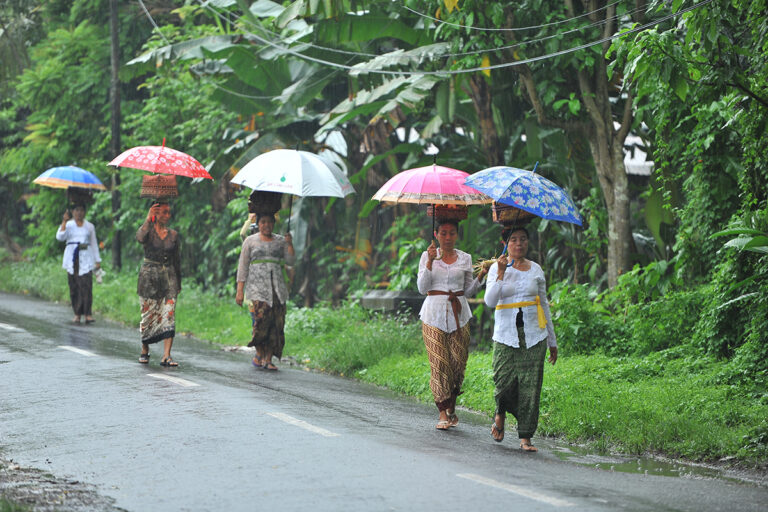
Bali is a land of emerald rice terraces, all part of the ancient (and UNESCO recognised) Subak System of agriculture. The fields that cascade down the island’s volcanic slopes aren’t some Instagram background; they’re the living heart of this environment.
Rice is the staple food of the nation; it has fed the population of Bali, using a sophisticated, spiritually infused agricultural system that has stood the test of time for over a thousand years. It’s an intimate part of the culture, and forward-thinking hotels are now seeking to connect modern luxury travellers with this heritage using the farm-to-table philosophy.
It’s an approach that delivers hyper-fresh, fully traceable ingredients, while supporting local farmers, preserving that vital cultural heritage, and offering guests immersive and meaningful culinary experiences.
We’ve been watching the evolution of this movement as it has spread from niche eco-resorts to becoming a core differentiator for the island’s 5-star resort brands.
It resonates on a deep level with conscious travellers who seek authenticity amidst a tourist boom. So, let’s explore the roots, implementation, real-world examples, benefits and future of farm-to-table in Bali’s hospitality scene.
The Roots Of Things: Bali’s Subak System And Rich Agricultural Heritage
It’s important to acknowledge that in Bali, agriculture is inseparable from the culture. The UNESCO-listed Subak system was recognised in 2012 as a true Cultural Landscape which embodies the Tri Hita Karana principle. That is the Hindu belief of harmony between human beings, nature and the divine.
The Subak system is a democratic, temple-centred water management cooperative that dates back to the 9th century AD. The water flows from mountain springs into canals and weirs to terraced sawah (rice fields) that are coordinated with local water temples, where rituals can be used to ensure fair distribution and spiritual and ethical balance.
Traditional Balinese rice varieties (including red and black rice) thrive in this system, alongside many other crops such as cassava, corn, spices, fruits, vegetables, coffee, and cacao. The farmers also practice what’s known as “multi-layered farming”, for example, using ducks to control the pests in the rice paddies, while adding coconut groves and herb gardens to encourage biodiversity.
We have to acknowledge too that the rise of tourism in Bali has put real strain on the Subak system. Land conversion from rice fields, competition for water from the hospitality industry, the migration of young people to work in hospitality and away from the farms, and, of course, climate variability all challenge the viability of traditional farming.
Hotels using the farm-to-table model can help to counteract these pressures by creating demand for local, often organic or regenerative produce and, in turn, keep fields viable and educate their guests to create further demand.
What Does Farm-To-Table Mean In The Context Of Bali?
Farm-to-table, in Bali, is not synonymous with “local sourcing”; it goes beyond that, emphasising:
- Traceability and freshness – ingredients will be harvested just hours (and sometimes just minutes) before they are served
- On-site or near-site production – hotel gardens, permaculture farms and direct farm partnerships ensure that food miles are kept to a minimum
- Regenerative and organic practices – there’s an aversion to the use of chemicals, waste is composted, and Subak traditions are encouraged and respected
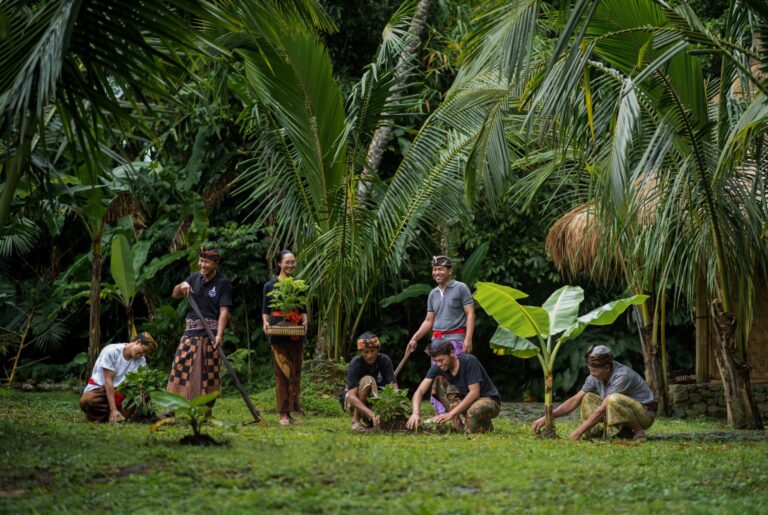
- Cultural immersion – guests often take part in rice planting, harvesting and Balinese cooking classes
- A Zero-Waste ethos – kitchen scraps are returned to the soil via composting programs rather than sent to landfills
This farm-to-table philosophy aligns with the spiritual and communal values of Bali, and, at the same time, it rises to meet the global demand for sustainable luxury.
How Are Bali’s Hotels Making The Connection?
Many of Bali’s best hotel properties are implementing the farm-to-table philosophy in creative and, importantly, scalable ways:
On-Site Farms And Permaculture Gardens
One of the easiest ways to contribute is for the hotel to maintain its own production sources, and this includes:
- Nusa Dua Beach Hotel & Spa – they’ve pioneered a permaculture garden where their guests can witness planting and harvesting, and the produce then goes both to the staff restaurant and to the guests’ menus
- AYANA Resort – the AYANA Resort is one of the largest in Bali, and part of the reason for the space it takes up is AYANA Farm, which supplies fresh herbs, vegetables, fruits and edible flowers to the on-site restaurants. Guests can enjoy farm-to-bar workshops, learn to craft gin from garden botanicals, and make afternoon tea from on-site produce. Waste from the resort is used for composting.
- Desa Seni – this hotel in Tabanan sources 80% of the menu for its Season Restaurant from the on-site gardens and also emphasises organic and ethical sourcing for the other 20%.
- Nadi Nature Resort – this lovely place in the rice terraces of Jatiluwih has a permaculture farm that supplies its cafe, and it also runs guided tours and provides support for local regenerative rice collectives.
- Bambu Indah – this incredibly luxurious resort has its Tembaga Restaurant, focusing on regenerative practices and uses both on-site and local sources for ingredients
Experiential Offerings
The chance to involve guests directly with agricultural and culinary practices is equally important and can be found in many resorts like Four Seasons Sayan and Alila properties, for example:
- Rice field tours and planting sessions – these are especially common in and around Ubud due to the proximity to Bali’s largest and most accessible rice terraces
- Farm-to-table dinners – set in natural surroundings, such as picnics in the fields or tables by the rivers
- Cooking classes – often involving local sourcing experiences and the chance to harvest and implement ingredients from the hotel gardens/farms
- Visits – whether to traditional markets, rice terraces or local farmers’ homes, they help to connect the human element
You can also find other interesting endeavours, such as the organic greenhouse and clear traceability of Viceroy Bali’s CasCades restaurant. At Tanah Gajah, a resort in Ubud, they celebrate home-grown ingredient experiences regularly.
Signature Experiences
Guests in this segment of the market seek out experiences that they cannot replicate elsewhere in the world. A typical farm-to-table journey in Bali might start with the morning harvest at the hotel garden, followed by a trip to a local market and then a Balinese cooking class.
The lunch features lawar (a spiced minced meat and vegetable salad) using ingredients that were picked in the same hour, and it’s paired with fresh local coconut water.
Then, the afternoon might be spent trekking in Jatiliwuh’s world-famous rice terraces or learning Subak rituals.
Then, the evening might culminate in a splendid multi-course dinner beneath the stars, with the Balinese chefs explaining the origin story of each dish.
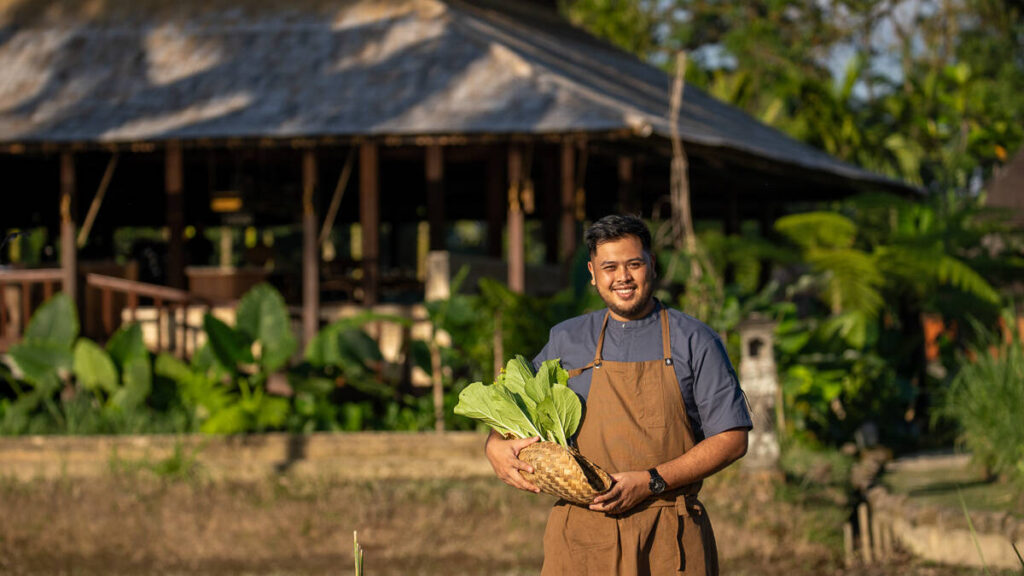
At properties like Om Ham Retreat in Gianyar Regency, the chefs personally select the best items from the organic garden as part of this ritual.
Guests at highland or beachfront resorts might enjoy a farm-to-beach or highlands-to-table variation on the farm-to-table concept, with local bounty finely combined with international culinary traditions.
The Benefits Of The Farm-To-Table Approach In Bali: Win-Win-Win-Win
The beauty of this system is that everyone wins, and that means with no losers, it’s a way to ensure that your Balinese holiday gives back to the island that we love.
- For Guests – this way of preparing food means unforgettable freshness and flavour. Every tomato tastes like a real tomato just off the vine. Herbs don’t just sing on the palate; they burst with aroma. The traveller and diner gain a deeper cultural appreciation for Bali. There are real wellness benefits from eating nutrient-dense, chemically clean food. There is spiritual joy in the stories shared and experiences gained in participating. Most of all, it helps to satisfy the deep-seated need in many people for purposeful travel.
- For the Environment – when food uses local ingredients, it reduces food miles and thus, brings about lower carbon emissions and reduces your carbon footprint for your holiday. Organic and regenerative growing methods help to improve the health of the soil, local biodiversity and water quality. Supporting the Subak system also helps to preserve Bali’s only UNESCO World Heritage offering and its associated landscapes and, in turn, reduces development pressure on those places.
- For the Local Community and Economy – direct purchases from farms help to raise the incomes of farmers, and they are often greater and more stable than the sales that farmers can make at the local markets. This, in turn, creates jobs in agrotourism, empowers women (who are often very much involved in herbs and vegetable cultivation efforts on the island), and encourages the youth of Bali to take up farming and to value it as a profession. It also means that agricultural revenues stay on the island rather than leaking out to the wider world and imported goods.
- For the Hotels – these experiences help hotels build stronger brand stories, they justify premium pricing and create media buzz. Most of all, they create loyalty from conscious travellers. For the marketing team, they often lead to “User Generated Content” (UGC), which can be invaluable for social media and creating connections to the hotel in other forms of media.
Challenges In Bali And The Road Ahead
It has to be noted that implementing farm-to-table philosophies and practices in Bali isn’t a seamless process. Supply consistency can vary widely with the seasons and weather variations.
It requires serious investment to scale up organic production to meet the luxury segment’s volume demands.
And there’s no doubt that in some rural areas, cold chains are poor to non-existent, thanks to logistical challenges.
Finally, there’s the real threat that young people in Bali prefer tourism jobs to those offered in the farming workforce. Without farmers, the farm-to-table principles are impossible to sustain.
But progressive hotels are addressing these challenges through:
- Farmer cooperatives and training programs
- Hybrid models (own farm + the use of multiple small suppliers rather than dependence on a single supplier)
- Guest education to build appreciation for the model and demand for it
- Government and NGO partnerships with a particular focus on preserving the Subak System
In fact, the future looks brighter than it has in some time, with a rising demand for regenerative tourism. We’d expect more vertical farming and technology integration in resorts, the use of blockchain traceability for ingredients, and deeper integration of the incredible Balinese culinary heritage into wellness programs and retreats.
Final Thoughts On Farm-To-Table Hospitality In Bali
Today’s travellers crave connection more than they crave consumption, and that means that farm-to-table isn’t some sort of fad. It’s a return to Bali’s traditional roots, reimagined for luxury.
The hotels that genuinely connect their guests to local agriculture don’t just serve a higher standard of food; they’re positioning themselves as the stewards of the soul of the island.
Whether you’re planning a wellness retreat in Ubud, a family getaway in Nusa Dua or a romantic highlands break, we encourage you to seek out properties that embrace this philosophy. Your palate, your plate and the island will thank you for it.
Ready to experience farm-to-table adventures in Bali? Why not book a stay at one of the pioneering hotels named above or join a rice terrace tour? Support the businesses that support the land and ensure that future generations can enjoy this paradise on Earth as well as you can.
You may also enjoy our guides to Bali’s micro-climates and how to understand Bali’s “shoulder seasons”.