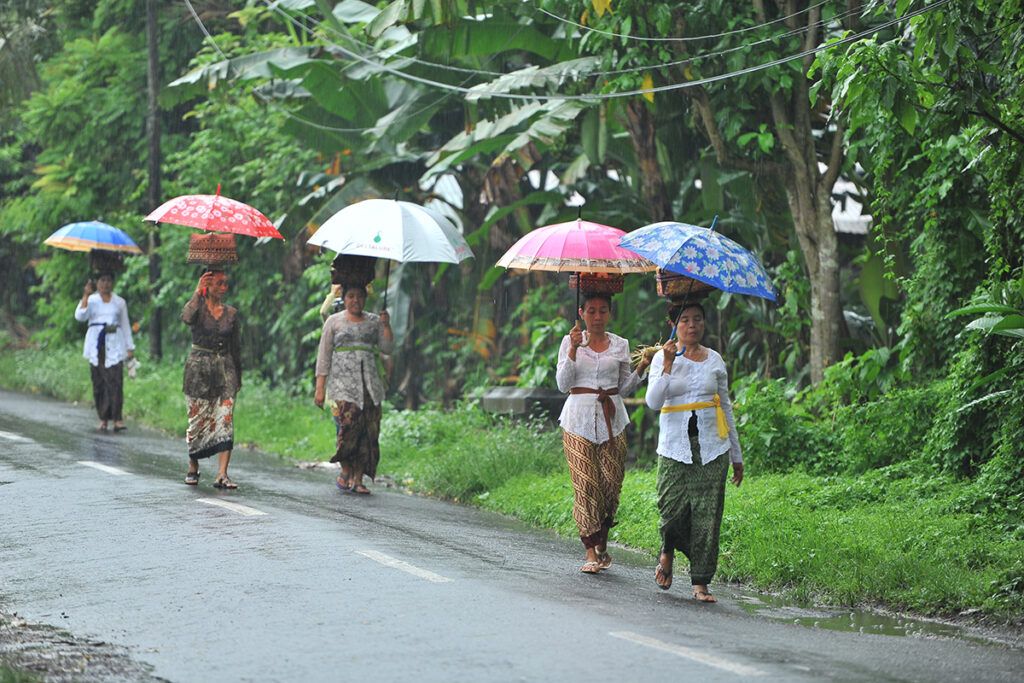
If there’s one topic regarding Bali that constantly sparks anxiety in travellers when we talk to them, it’s the rainy season (or monsoon season). That’s because many guests seem to imagine that this means weeks of non-stop torrential rain, no beach fun and roads that are so flooded that their dream holiday becomes a washout.
The reality is different. Bali’s wet season (which runs roughly from November to March) is far more nuanced than that. It’s usually far more rewarding than the myths about monsoon season suggest, particularly when you understand how it varies across the geography of the island.
Different regions of Bali experience the rainy season in unique ways, and that creates opportunities for holidaymakers in the know. From lush rice terraces glowing an emerald green in the heart of the island to more relaxed beach clubs in the South, the monsoon season helps to change Bali into a greener, more affordable and less crowded paradise.
So, in this guide we aim to separate the facts of the rainy season from the fiction; we’ll break down the regional differences and share some practical insights from our long experience on this island. Whether you are a traveller planning a trip or a fellow industry professional, this will help you to navigate and take advantage of Bali’s monsoon magic.
What Exactly Is Bali’s Monsoon Season?
Bali is part of the tropics; that means it’s not on the equator, but it is between the tropics of Cancer and Capricorn, and that ensures it has a tropical climate.
So, it has two primary seasons. The dry season (sometimes erroneously called the “hot season”; it’s not, in fact, the hot season; it’s the cooler of the two seasons) runs from April to October and is dominated by the southeastern trade winds.
And the wet season (which is also the hottest season) runs from November to March, and it’s influenced by the northwest monsoon winds, which bring the moisture from the Indian Ocean (which results in rain).
Peak rainfall tends to be during the period from December to February, and January is typically the wettest month of the year (with around 300- 350 mm of rain on average island-wide, though this will vary hugely depending on exactly where you are).
The rain usually arrives as short, intense afternoon or evening showers. Think 1-3 hours of seriously heavy downpours followed by clearing skies. It’s rarely all-day gloom. Humidity rises after the rains, though, and temperatures hover at around 26-30 degrees Celsius (79-86 degrees Fahrenheit) except in the highlands, which are a little cooler, and the island turns into a lush, verdant paradise.
It’s also important to note that this isn’t a uniform blanket of rain. Bali is a big island, it has varied topography and the volcanoes, mountains, coastal plains, ocean influences, etc., create microclimates. When you understand this, hospitality operators can maximise for occupancy, and travellers can more easily choose the right base at this time of year.
Monsoon Myths Busted
OK, now that we’ve covered what the monsoon season is, let’s look at what it’s not and why this matters.
Myth 1: It Rains Non-Stop All Day, Every Day
The reality is very different. Most days feature plenty of sunshine (in fact, there are around 8 hours of sunshine a day on average during this season, just an hour less than in the dry season), especially in the mornings.
Showers are reasonably predictable, but they aren’t constant. Many guests will enjoy full beach or pool days interrupted by only a refreshing afternoon burst.
From our experience, even during the peak part of January, sunny stretches dominate the skies. Dramatic skies can also add photogenic flair to your Instagram shots rather than spoil your plans.
Myth 2: The Whole Island Is Equally Affected
Rainfall actually varies significantly by region. The southern beach towns are usually much drier than the central highlands. Ubud and the northern mountains get the most rain, and places like Uluwatu and Nusa Dua, the least.
Myth 3: Beaches Are Ruined, And Everything Closes
It’s fair to say that some of the southern beaches see a lot of debris during heavy rainfall peaks; many beaches remain perfectly swimmable.
For example, while Kuta Beach can see huge amounts of waste come ashore at this time of year, Canggu Beach, just a little further down the coast, is relatively clear all year round.
And as for everything closes? Mostly, nothing closes the attractions, resorts, restaurants and activities are all open for business as normal. Most of the day is hot and sunny; there’s no seasonal closing in Bali. However, there are fewer crowds at many spots and this leads to better service and better deals.
Myth 4: It’s A Terrible Time For Tourism And Hospitality
The shoulder and wet season periods will often deliver some of the highest guest satisfaction scores. The lush scenery, lower rates (hotels are often up to 40% cheaper, sometimes more), along with authentic local experiences, shine through in reviews.
How The Rainy Season Really Works In Bali’s Different Regions
So, let’s take a look at how this season works in each of Bali’s main regions and what you really need to know to enjoy your holiday.
South Bali: Beaches, Buzz And Manageable Showers
South Bali is the most popular part of the island, and it incorporates Uluwatu, Nusa Dua, Sanur, Denpasar, Canggu, Kuta, Legian, Seminyak, Seseh and Jimbaran.
This is where you will find most international visitors at this time of year. In this area, the monsoon brings frequent but typically short showers with a monthly rainfall of just 150- 250 mm even in the wettest months.
On the coast, you will find that the mornings are sunny and often great for surfing, yoga, and beach walks. The afternoons can see heavy showers at times, which can cause temporary street flooding in the lowest-lying areas in places like Kuta because of drainage challenges.
Some beaches, but not all, will start to accumulate debris and trash from runoff. However, Bali has many dedicated beach clean-up crews that ensure that even the worst-impacted beaches do not stay that way for long. This issue particularly impacts the beaches in Kuta and Legian.
Uluwatu and the Bukit Peninsula in general fare better and are even drier and windier. The dramatic cliffs the region is known for also provide some awesome spots for watching stormy seas. Nusa Dua’s sheltered resort enclave remains excellent for sun-seekers and families seeking the best of the weather.
At this time of year, look for villas and hotels with covered outdoor spaces, infinity pools and beach club experiences are great too. Also check out spa days, indoor dining experiences, sunset cocktails in sheltered bars, etc.
You can also find smart operators that promote “rainy day” packages with private chefs, temple tours, cooking classes, cultural experiences, etc. These help to turn inclement weather into an asset rather than a negative.
Most of all, this area, which is normally very crowded in the peak dry season months, has fewer visitors, which means more personalised service offerings and less stress at big attractions.
Central Bali: Ubud And The Highlands With Their Lush, Misty Magic
Ubud, Tegallalang, Jatiluwih, etc. and the areas around Mount Batur see the most rain, and 250-350 mm or more is not unknown during the peak months of the monsoon. You will find frequent afternoon thunderstorms at this time of year and misty mornings.
However, don’t despair because for nature lovers the monsoon season is fantastic in these regions. The rice terraces see an explosion of rich, vibrant green, the waterfalls thunder at their fullest force and the air is fresh and alive.
Once you see Jatiluwih or Tegallalang Rice Terraces looking Instagram-perfect after a shower, with their reflective paddies and dramatic clouds, you will be glad you came at this time of year.
That doesn’t mean everything is perfect; roads and paths can get slippery. It’s best to only ride a motorcycle if you have experience in these conditions and to ensure you have shoes with an effective grip.
It also means that higher elevations can get cooler at night than you might expect, so bring a sweater or a jacket just in case. Flash flooding can happen, but it’s rarer than in the South and still possible in the valleys.
The mist and light rain in the mornings help to enhance that jungle vibe for yoga retreats, art workshops, spiritual healing sessions and forest walks, though.
You’ll find that boutique resorts and rice-field villas see a strong level of demand at this time of year from wellness travellers. Properties with indoor-outdoor flow, daybeds under cover and cultural programs, in particular, excel at this time of year.
Guests say they love the serenity, that there are fewer scooters everywhere, more birdsong in the air, and that everything enjoys a certain post-rain freshness.
North And East Bali: Variable But Often Rewarding
North Bali (including Lovina, Munduk and Pemuteran) and East Bali (including Amed, Candidasa and Sidemen) can see heavy rain in some spots, particularly in the mountains near Bedugul and Munduk (up to 300-400 mm is typical in the wettest part of the year).
The East Coast, however, can be drier, and it’s great for diving, and the black-sand beaches are particularly black and glistening in the right conditions when the South is wetter.
This is an amazing time for stunning and uncrowded landscapes. Snorkelling and diving are amazing when you have calmer seas and the right conditions. Waterfalls and temples always feel more immersive at this time of year.
There are some downsides, though. Access roads are prone to minor disruptions at this time of year, and some of the smaller beaches can see rough waves.
This is the place to go for eco-tourism and adventure packages in the Wet Season, and this is borne out by high repeat guest rates from those seeking authentic Bali as opposed to party vibes.
West Bali: Quieter And Less Impacted
Areas like Medewi, Balian Beach, West Bali National Park, etc. often see fairly moderate rain at this time of year. (150-220mm)
The surf spots remain extremely viable, and because this is always the quietest part of Bali, it’s extra quiet in the monsoon season. It really feels like a proper tropical escape.
How The Wet Seasons Affect Popular Activities In Bali
The rain does have an effect on the popular activities on the island, including:
- Beaches & Surfing – the South’s swells can be inconsistent and sometimes exceedingly powerful in this season; however, the surf on the East Coast often improves. Many beaches remain swimmable outside of the peak debris times.
- Rice Terraces & Nature – this is the best time of year for hiking and nature photography, water flows enhance the beauty of these spots immeasurably.
- Temples & Culture – the rain adds a certain mystical dimension to spots like Ulun Danu Beratan (which also floats more dramatically when the lake is full).
- Waterfalls – waterfalls are thrilling in this season, particularly towards the end of January, when they reach peak water flow, and they look amazing in photographs and in videos.
- Water sports and adventure travel – this can be something of a mixed bag; some days are perfect for these activities, but on others, you’d be better off sticking by the pool or enjoying a spa day instead.
- Road travel – there may be occasions when you are delayed by traffic or minor flooding. Scooter riders must exercise additional caution, particularly during the rain and just after.
Mostly, the effects of this season are not too bad, but we must warn you that boat journeys out to the Nusa or Gili Islands can get very unpleasant in the middle of the monsoon storms.
You should only attempt these journeys if you don’t get seasick and are travelling light, it’s possible for your luggage to get soaked or even lost overboard in the choppy waters, so ask your hotel to store most of your stuff until you return to Bali or place it in to one of the paid storage places scattered around the island.
Practical Tips For Travellers And Operators In The Monsoon Season
We’ve also got some simple tips for handling the monsoon weather when you arrive on the island. It’s nothing drastic, but consider:
- Packing smart – bring quick-drying clothes, lightweight jackets (or a rain poncho), a waterproof bag and sturdy shoes.
- Choose the right location – head to the south if you want beach days, east if you want surfing, the centre if you want lush jungles and rice fields, etc. and have a contingency plan if the weather won’t let up. The joy of microclimates is that you can easily change your experience by moving.
- Get your timing right – November and March are much more manageable than the December – February peak period. However, the best discounts are in the peak months, except during the Christmas to New Year Period, which is a second “peak season”.
- Get into the daily rhythm of the island – do stuff outdoors in the mornings and save your indoor activities for the afternoon.
- Monitor local conditions – use a weather app, talk to the hotel staff, etc. Weather can change quickly and differ dramatically within just a 30-minute drive
Hospitality-focused businesses should make sure that they invest in covered lounging areas, backup generators, enhanced spa menus and flexible policies at this time of year. It’s a good idea to promote “Monsoon Magic” deals which highlight value and exclusivity.
The rainy season will test a business’s adaptability and reward its creativity. The property that leans into this season with wellness retreats, farm-to-table experiences among green fields and provides romantic indoor settings is going to see stronger loyalty and reviews.
Why The Monsoon Can Offer The Best Time To Visit Bali
This really can be the best time of year in Bali. Fewer crowds mean it’s easier to book the best restaurants and attractions. Outside of the holiday season (Christmas to New Year), prices drop significantly.
The island just feels more local and relaxed than in the peak season. The landscapes reach peak lushness, and they support the beautiful local agricultural system, which is a hallmark of the Balinese way of life.
Guests who embrace this season often report it being their most memorable trip to Bali. They love the slower pace, the deeper connections they form, the stories they tell of dancing in the warm rain at beach clubs and watching lightning come down over the rice fields.
Final Thoughts On Rainy Season In Bali, Embrace It And Reap The Rewards
Bali’s monsoon season shouldn’t be seen as a deterrent. It’s a different and sometimes even more authentic experience on the island.
By utilising an understanding of the regional variations from the sunnier southern peninsula to the verdant central highlands, you can plan an unforgettable experience at this time of year.
Myths of endless misery are just that, myths. The island is vibrant, green and has great deals and magical moments to offer.
Travellers shouldn’t let the fear of rain hold them back; mostly, things are sunny with infrequent showers. And it’s a great time of year for hospitality providers to differentiate their properties and really delight their guests.
Bali in the wet season isn’t any less than it is in the dry season. In fact, it’s layered, lush, lovely and full of surprises. If you come prepared and stay flexibile, you’ll soon discover why so many people love this season on the island the most.
If you thought this piece was useful check out our guide to cycling Bali’s rice terraces and our Sound Healing and Breathwork Bali guide too!