Bali is one of the most sought-after destination wedding celebration spots in the world. It has the perfect romantic blend of dramatic landscapes, world-class resorts and profound spiritual heritage. This is what creates an irresistible backdrop for luxury celebrations of the union between two people.
One thing that helps to set Bali apart from other top wedding destinations is how ancient Balinese Hindu traditions can infuse celebrative ceremonies with depth, meaning and unforgettable authenticity.
Modern couples will no longer settle for generic vows spoken on a beach somewhere, anywhere, but instead they’re seeking out transformative experiences that stem from centuries-old traditions which honour harmony, purification and the blessings of the divine.
This fusion drives exceptional guest engagement, longer planning cycles within the industry, and, of course, premium bookings and higher conversion rates.
Resorts and planners authentically incorporate rituals, which in turn are easier to find online than generic “destination wedding hotels”. Almost every benefit to the resorts is also a benefit to their guests; it’s a virtuous circle.
So, let’s take a look at the ancient rituals that inspire some of today’s celebrations in Bali, how luxury properties have worked to incorporate these rituals, some real-world examples, the benefits and challenges of this approach and some practical advice for couples looking to cement their love in Bali.
The Spiritual Foundation: Balinese Hinduism And Tri Hita Karana
Balinese Hinduism is a unique blend of Indian Hinduism, animism and ancestral worship. It emphasises the principle of Tri Hita Karana, which is the underlying understanding of happiness and harmony, the relationship between humans and god, humans and other humans, and humans and their environment.
Weddings (known as Pawiwahan in Bali) are major lifecycle rites that are designed to embody this philosophy. They are not merely legal or social unions but a sacred process that is meant to align the couple with each other, the divine forces, their ancestors and their community.
Traditional Balinese weddings may span multiple days with elaborate processions, offerings (banten and/or canang sari), gamelan music and the blessings of priests. While full traditional ceremonies are highly complex and typically only for locals, modern destination weddings are able to adopt and adapt key elements of these ceremonies to become accessible, photogenic and deeply meaningful without requiring a conversion to Hinduism.
Key Ancient Balinese Rituals That Inspire Modern Weddings
There are many rituals in Balinese Hinduism, but these are the main rituals upon which a destination wedding may draw:
Melukat: The Sacred Ritual Of Purification
Melukat (or sometimes, Melukatan) is one of the most popular and easiest to adapt spiritual rituals. It is a spiritual cleansing using holy water (tirta). It is performed at sacred springs, temples and even resorts.
It is said to wash away negative energies, impurities and past burdens to prepare the couple for a truly harmonious union. Priests (pemangku) will use coconut shells or sprinklers and add fragrant flowers, accompanied by mantras and offerings.
In a modern wedding, Melukat is often used for a pre-ceremonial or welcome event. Couples will emerge feeling renewed, centred and spiritually aligned. That’s the perfect state for setting an intentional tone for the nuptials to follow.
Mekala-kallan Or (Makala-kala): A Ritual To Ward Off Negative Spirits
This is a protective ritual which involves burning bamboo (tetimpug) to create a smoke that dispels disruptive spirits (buthakala) which might cause a level of marital discord.
It symbolises safety and a fresh start. Modern adaptations may feature symbolic fire elements and simplified blessings for harmony and goodness.
Mewidhi Widana: Blessings Before The Gods
This is, of course, the core religious ceremony where the couple beseeches divine approval for their union and the gods’ protection for their marriage.
It is usually led by a high priest and will include prayers, offerings and symbolic acts to invoke prosperting and unity.
Many destination wedding packages will include a shortened, non-legal version of this ceremony for its emotional impact and raw beauty.
Betel Leaf Exchange And Other Symbolic Offerings
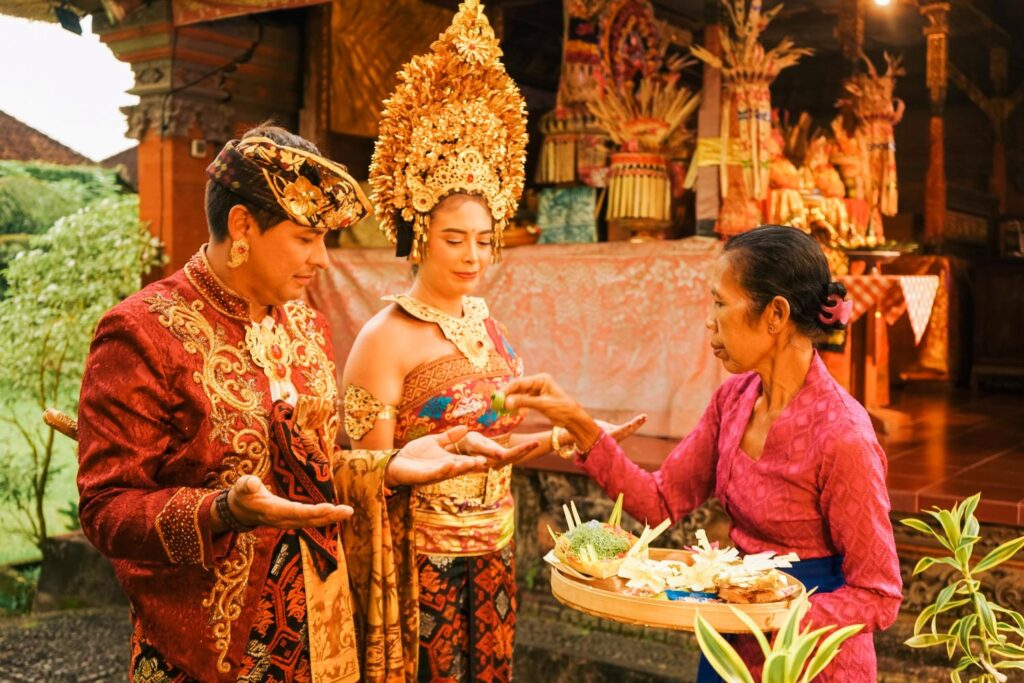
The exchange of sirih pinang (betel leaves) symbolises health, prosperity and happiness. Other similar acts might include planting taro or turmeric for the blessings of your ancestors, tearing a bamboo mat to show purity, or making joint offerings to the gods and your ancestors. These are highly visual elements that can easily be worked into a contemporary marriage ceremony.
Processions And Community Elements
Ngidih (the proposal and sometimes asking permission) and processions with traditional attire, umbrellas and music highlight family unity and the support of the community.
A modern wedding might incorporate a stylised procession or ngayah (communal helping) spirit by involving the guests in the ceremony.
Metath (Tooth Filing) Adaptations
In Bali, this is typically a puberty rite that symbolises control over the base emotions of greed and anger. Of course, nobody expects visitors to file their teeth, but symbolic versions or explanations often appear in wellness-focused wedding packages.
These rituals all emphasise balance, a heavy respect for nature, and spiritual partnership. These are values that resonate strongly with today’s conscious couples.
Ritual Integration Into Modern Bali Destination Weddings
Luxury resorts in Bali have mastered the art of blending these ancient traditions with modern luxury:
- Customised packages – many offer “Balinese blessing ceremonies” which combine Melukat, priestly blessings and symbolic exchanges with Western vows (it’s important to note that most “weddings” in Bali are more like commitment ceremonies with the actual legal wedding taking place in the couple’s home country due to the complexity of paperwork in Indonesia)
- Venues that enhance the ritual atmosphere – cliff-top locations in Uluwatu frame ocean blessings, Ubud’s rice paddies offer serene settings for purification ceremonies, beachfronts in Canggu or Seminyak suit sunset ceremonies with fire elements
- Traditional attire and decor – couples will don ornate kebaya and udeng or their modern fusion equivalents. Floral fabrics, sarongs, parasols, and flowers help to create Instagram-worthy aesthetics for the ceremony
- Holistic experiences – a pre-wedding Melukat is carried out at a sacred site, followed by sound healing, yoga and temple visits. After the ceremony, there are gamelan music performances, Legong or sometimes, Kecak, dancing and feasts of Balinese cuisine
- Sustainable focus – offerings are eco-friendly, if water is involved, everything is reef-safe, and there’s support provided to the local artisans who align the rituals’ harmony with the environment with modern values and standards
The resorts work to collaborate with certified local priests, cultural experts and wedding planners to ensure respect and accuracy in the details and to ensure that they deliver a genuine experience rather than an act of cultural appropriation.
Standout Resorts And Real World Experiences
Not all venues are equal when it comes to wedding experiences, but properties like Ayana Resort, Four Seasons (both Jimbaran and Sayan), Alila Uluwatu, COMO Shambhala Estate and Tirtha Bali all have reputations for excelling at ritual-infused weddings.
Cliff-edge pavilions in Uluwatu offer dramatic backdrops for priest-led blessings. Ubud can deliver spiritual depth and jungle or river settings for Melukat.
One trend that we’ve noticed is multi-day itineraries, Melukat on arrival, a rehearsal with symbolic exchanges, a main ceremony with vows and Mewidhi Widana elements, and then a farewell with ancestral offerings.
International couples value the non-legal spiritual layer that this provides alongside civil ceremonies in their own countries (though, in theory, Bali allows for legal weddings for certain nationalities, obtaining the appropriate documentation is expensive and tedious).
Benefits For Couples And For Hospitality Brands
For the lucky couple, these rituals help to elevate their wedding from a party to a profound journey. They help to foster mindfulness, cultural connectedness, and deliver memorable photos and stories that last a lifetime.
The spiritual dimension that this brings helps to boost differentiation in a competitive marketplace. It supports higher package values, extended guest stays, authentic stories for social media, and loyalty.
Challenges And Responsible Ritual Integration
It’s fair to say that delivering something authentic requires care. Misrepresentation might offend the local people or feel performative rather than substantive.
Solutions include working with respected local priests, educating the couple on the meaning of what’s being done, and prioritising smaller, intimate ceremonies over large, showy spectacles.
Logistical hurdles include the weather (at outdoor rituals), guest comfort with the cultural elements, and regulatory aspects for legal weddings.
Over-commercialisation risks diluting the sacredness of the ceremony, so leading properties in this market emphasise education and community benefits.
Sustainability remains a big priority for most and minimising single-use plastics in offerings, supporting local temples and offsetting impacts helps to honour the environmental ethos of these rituals.
The Future Of Ritual-Inspired Weddings In Bali
As experiential and regenerative travel grows in popularity, you can expect deeper integrations with personalised rituals based on a couple’s intentions.
We foresee tech-enhanced storytelling (such as Augmented Reality used to explain symbols), hybrid virtual elements for distant family, and expanded tie-ins to wellness programs.
Lesser-known regions such as North Bali and Nusa Pendia may begin to vie for the most authentic and intimate experiences.
Bali’s hospitality leaders will continue to innovate in this area while safeguarding cultural integrity and ensuring that ancient wisdom enriches the world rather than being used as a decoration for a less substantive purpose.
Final Thoughts On Crafting Your Own Sacred Celebration On The Island
The ancient Balinese rituals help to inspire a modern destination wedding and offer far more than just beautiful photographs or a bit of exotic flair. They deliver a framework for intentional unions.
They cleanse the past, seek blessings for the future, and commit to harmony in all relationships in the couple’s lives. Whether they incorporate a full Melukat at a holy spring, a priest-led blessing at sunset or simple and subtle symbolic offerings amid luxury decor, these elements are meant to create weddings that resonate at the level of the soul.
For couples dreaming of a Bali wedding, the invitation is clear: it’s time to embrace the island’s spiritual heritage and craft a day that honours where you’ve been in life, and where you are going now, together.
We recommend that you consult experienced wedding planners and resorts that specialise in cultural authenticity. Let the gamelan music echo, fragrant offerings fill the air and holy water blessings mark the start of your shared journey.
The ocean whispers to you, the temples call out and the spirits await, they are ready to bless your love story in true Balinese fashion.
If you’re ready to plan, then explore Bali’s premier ritual-inspired wedding venues and being designing a celebration as a ritual bond for a lifetime.
You could also check out our guide to choosing your accommodation based on your travel style and our tips for solo female travellers.